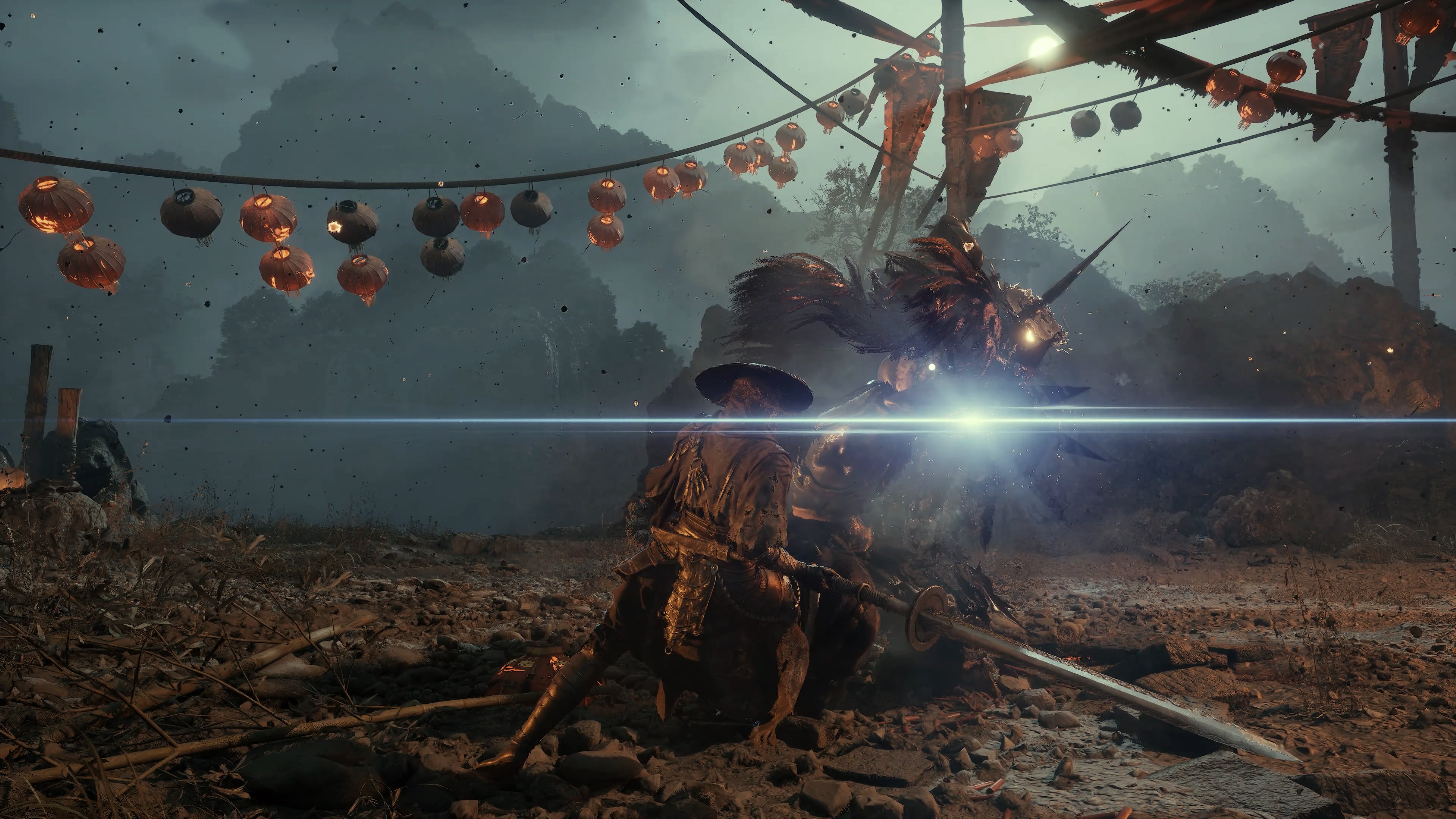
The Phantom Blade Zero weapons list runs to more than 30 primary weapons and 25 Phantom Edges, for an arsenal of over 55. You carry two primary weapons and two Phantom Edges at a time and swap them mid-combat, and the important part is not the total count — it is that every weapon is built around its own motion set, combo rhythm and defensive hook rather than a stat block.
On this page
Phantom Blade Zero weapons list by category
| Category | Speed and damage | What it is for |
|---|---|---|
Sword | Fast and balanced | The all-rounder; the safest first weapon |
Dual Blades | Very fast, aggressive | Rushdown, and the fastest Sha Chi generation in the game |
Greatsword | Slow, heavy | The biggest single hits, paid for with speed |
Spear | Medium | Range control and spacing |
Arm Cannon | Ranged hybrid | A ranged option with slower Sha Chi generation |
Each category changes the fight rather than the numbers. Dual Blades let you rebuild Sha Chi faster than anything else, Greatsword and Arm Cannon generate it more slowly, and Spear lets you fight at a distance the other four force you into. Which one you pick is therefore a resource decision as much as a damage decision.
Phantom Edges run alongside your blades
Phantom Edges are the second weapon layer. There are 25 of them, they cover ranged, heavy and traversal roles instead of duplicating the primary blades, and they are activated with R2. Two confirmed examples are the Savage Axe, which charges for three heavy Sha Chi-damage strikes, and the Ink Cut, which chains into your primary weapon's hits to extend a combo.
Edges are also exploration keys, because certain routes only open once you own the tool that breaks them. What Phantom Edges do and how to spend their Sha Chi covers that in full.
Named weapons worth recognizing
White Python and Red Viper are a matched pair of one longsword and one shortsword, and they are the clearest example of what the pairing system is for. The White Python swings wide; the Red Viper strikes precisely. Together they alternate Square for the short sword and Triangle for the long sword, and the longsword can launch the shortsword at range. The pair is built for speed and for switching quickly between offence and defence.
Venomous Softblade is a flexible sword built around counterplay. Its unique block lets you hold L1 and press Triangle at the right moment for a perfect parry, after which the riposte massively cuts the target's Sha Chi gauge and shatters their defence.
Juggernaut is a heavy polearm-style weapon that charges through parries rather than stopping at them.
Seamless Death is a pair of circular blades built for fast multi-hit strings.
Drunken Blade is tied to drinking, and its drunken mode makes your attacks erratic once drunken energy builds.
White Python and Red Viper
are a matched pair of one longsword and one shortsword, and they are the clearest example of what the pairing system is for. The White Python swings wide; the Red Viper strikes precisely. Together they alternate Square for the short sword and Triangle for the long sword, and the longsword can launch the shortsword at range. The pair is built for speed and for switching quickly between offence and defence.
Venomous Softblade
is a flexible sword built around counterplay. Its unique block lets you hold L1 and press Triangle at the right moment for a perfect parry, after which the riposte massively cuts the target's Sha Chi gauge and shatters their defence.
Juggernaut
is a heavy polearm-style weapon that charges through parries rather than stopping at them.
Seamless Death
is a pair of circular blades built for fast multi-hit strings.
Drunken Blade
is tied to drinking, and its drunken mode makes your attacks erratic once drunken energy builds.
Why the pairing rules matter
Your two primary weapons must be of different types. Two short blades will not dual-wield, and two longswords will not either — only a mixed pair such as one long and one short gives you a combined moveset with its own combo strings.
Each pairing also derives its own combos for breaking guard, controlling space, burst damage or spacing, so the pair you pick determines what your buttons do rather than just how fast they do it. That constraint is what makes how builds actually work a question about combinations instead of about weapon levels.
Bosses hand you their weapons
Defeating certain enemies grants their weapon and their signature technique, so the boss roster and the weapon roster grow together. Not every weapon works against every enemy either — there is a weapon weakness system, and the intended play is to change your loadout for the foe in front of you.
Because bosses are also the main source of new blades, the weapon list and the fight list are worth reading together. Every revealed boss and how the fights are structured names which ones hand over what.
Upgrades change how a weapon fights
Each weapon has its own upgrade and development path that changes its moves and combat style as it grows, so a leveled weapon is not the same weapon with a bigger number. Materials are shared across the whole arsenal rather than bound to a single weapon, which is what makes it practical to move an investment between weapons when a pairing stops working for you.